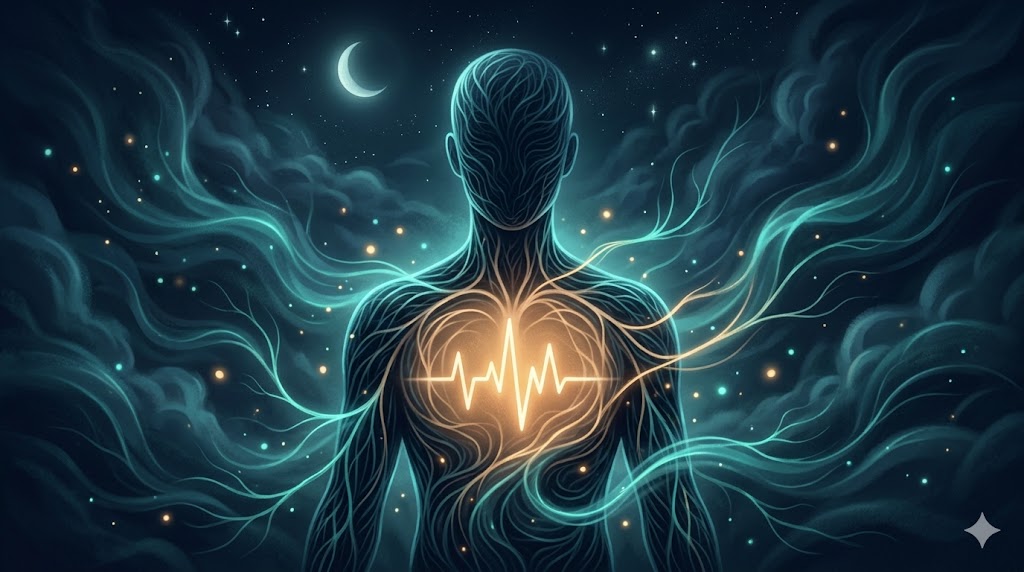
Anxiety has a bad reputation. We talk about it like it's a malfunction — something broken inside us that needs to be shut down. But here's the thing: anxiety isn't your enemy. It's your oldest, most loyal protection system, just working a little too hard in a world it wasn't built for.
The Fight-or-Flight Response: Your Inner Alarm System
When your brain detects a threat — real or imagined — it triggers a cascade of physical changes designed to keep you alive. Your adrenal glands flood your bloodstream with adrenaline and cortisol. Your heart beats faster to pump blood to your muscles. Your breathing quickens to take in more oxygen. Digestion slows (no need to digest lunch when you might need to run). Your pupils dilate to sharpen your vision.
This whole response takes about 200 milliseconds. It was forged over millions of years of evolution to help your ancestors outrun predators, and it's remarkably effective at exactly that job.
The problem? Your nervous system cannot tell the difference between a lion charging at you and a work deadline. Both trigger the same ancient alarm. So when you feel your heart racing before a presentation, your palms sweating on a first date, or your chest tightening at 2 a.m. over tomorrow's to-do list — that's not weakness. That's your brain doing exactly what it evolved to do, just pointed at the wrong thing.
Anxiety is protective by design. The same system that causes you to dread a difficult conversation also stopped your ancestors from walking into a predator's den. The goal isn't to eliminate anxiety — it's to work with it rather than against it.
Common Physical Symptoms (and Why They Happen)
Understanding what's actually happening in your body can take some of the fear out of anxiety — because anxious symptoms are deeply uncomfortable, and that discomfort can make the anxiety worse. Here's what's really going on:
- Racing heart: Your heart is pumping harder to prepare your muscles for movement. It feels alarming, but it's not dangerous.
- Shallow or rapid breathing: You're taking in more oxygen. Sometimes this leads to slight dizziness because you're exhaling too much carbon dioxide.
- Tight chest or throat: Muscles around your ribcage and chest tighten as part of the stress response. This is why anxiety can feel physically suffocating.
- Nausea or "butterflies": Blood is diverted away from your digestive system, which is not a priority when your body thinks it's in danger.
- Sweaty palms: Evolutionary theory suggests this helped our ancestors grip things better. Now it just makes handshakes awkward.
- Muscle tension: Your body is literally bracing for impact, tensing up to protect itself.
The Anxiety Spiral
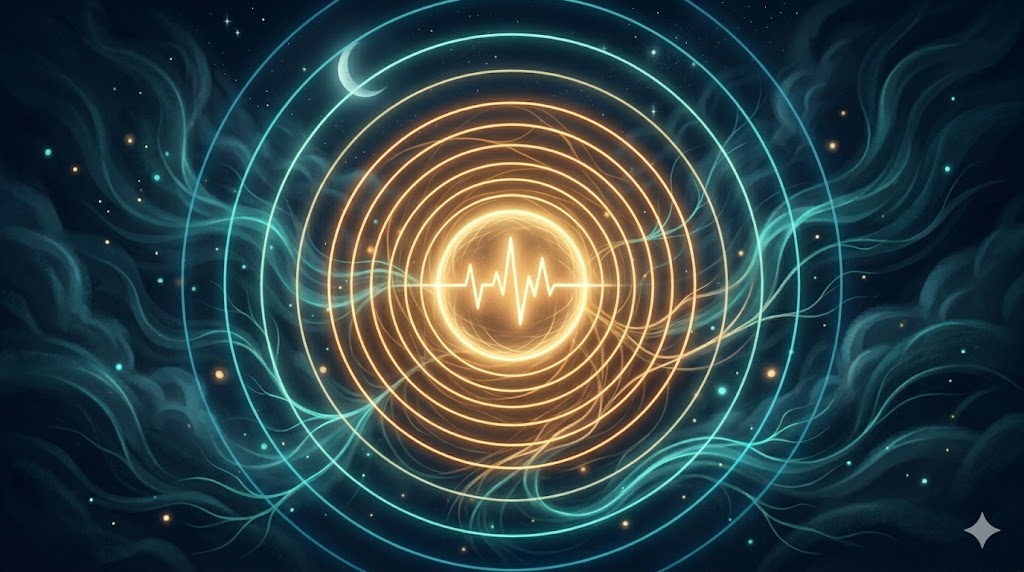
One of anxiety's cruelest tricks is that it feeds on itself. You notice a physical symptom — say, your heart skipping a beat. Your brain flags this as something to worry about. The worry produces more adrenaline. More adrenaline produces more symptoms. More symptoms produce more worry. Round and round.
This is the anxiety spiral, and it's the mechanism behind panic attacks. A panic attack isn't a sign that something is medically wrong with your heart or lungs — it's the feedback loop turned up to full volume. That doesn't make it any less terrifying in the moment, but it does mean it can't actually harm you.
Interrupting the spiral usually involves doing something your nervous system wasn't expecting: slowing your exhale, grounding yourself in physical sensation, or simply naming what's happening. "This is anxiety. My body thinks I'm in danger. I'm not." Sometimes just labeling it is enough to take the edge off.
When Anxiety Misfires: Chronic vs. Acute
Acute anxiety — the kind that spikes before a job interview and fades afterwards — is completely normal and even useful. It sharpens your focus and boosts performance. Research consistently shows that moderate anxiety improves outcomes in high-stakes situations.
Chronic anxiety is different. When the alarm never fully switches off, when you wake up anxious without a clear reason, when worry starts dictating your choices and shrinking your world — that's your nervous system stuck in a loop it can't exit on its own. This is where anxiety becomes a disorder rather than a feature.
It might be time to talk to a professional if your anxiety:
- Lasts most days for six weeks or more
- Leads you to avoid things that matter to you
- Is disrupting sleep, work, or relationships
- Includes panic attacks that feel uncontrollable
- Feels impossible to manage on your own
Reaching out isn't giving up — it's giving your nervous system the support it actually needs.
Working With Anxiety, Not Against It
The instinct when anxiety strikes is to fight it, avoid it, or white-knuckle through it. But resistance often amplifies the signal. A more effective approach is acknowledgement without judgment — letting the feeling exist without catastrophizing it, and reminding yourself that sensations, however uncomfortable, are temporary.
Regulated breathing is one of the most researched tools for dampening the fight-or-flight response. Extending your exhale activates the parasympathetic nervous system — your body's built-in calm switch. Even a few slow, deliberate breaths can measurably lower your heart rate within minutes.
Over time, practices like mindfulness, journaling, and therapy — particularly cognitive behavioral therapy — help you reshape the mental patterns that keep the alarm system misfiring. The goal isn't a life without anxiety. It's a life where anxiety no longer gets to make all your decisions.