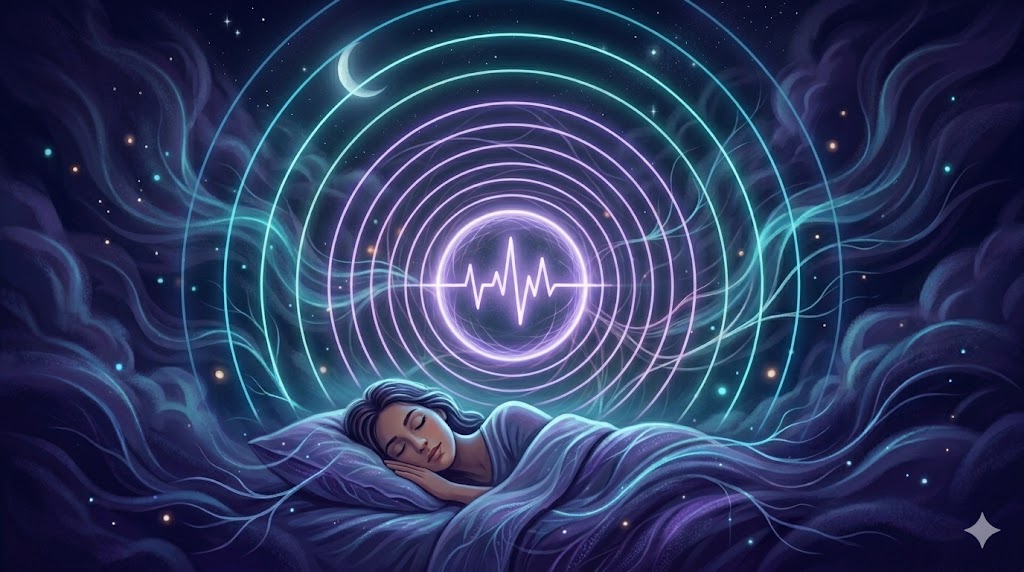
Most of us treat sleep as the thing that happens after everything else is done. The negotiable item. If you need more hours in the day, you take them from the night. We've built an entire culture around this idea — wearing tiredness like a badge of hustle.
But sleep is not passive downtime. Every hour you spend unconscious, your brain and body are doing some of the most sophisticated, irreplaceable work of your entire day. There's no shortcut and there's no substitution. Here's why those 7–8 hours aren't a recommendation — they're a biological requirement.
What Actually Happens While You Sleep
Sleep isn't one state — it's a structured cycle that repeats roughly every 90 minutes, four to six times a night. Each cycle moves through distinct stages with very different jobs.
Light sleep (N1 and N2) is the transition from wakefulness. Your heart rate and body temperature begin to drop. In N2, your brain produces bursts of electrical activity called sleep spindles, which researchers believe are important for learning and memory consolidation — essentially, your brain is quietly filing away what you experienced during the day.
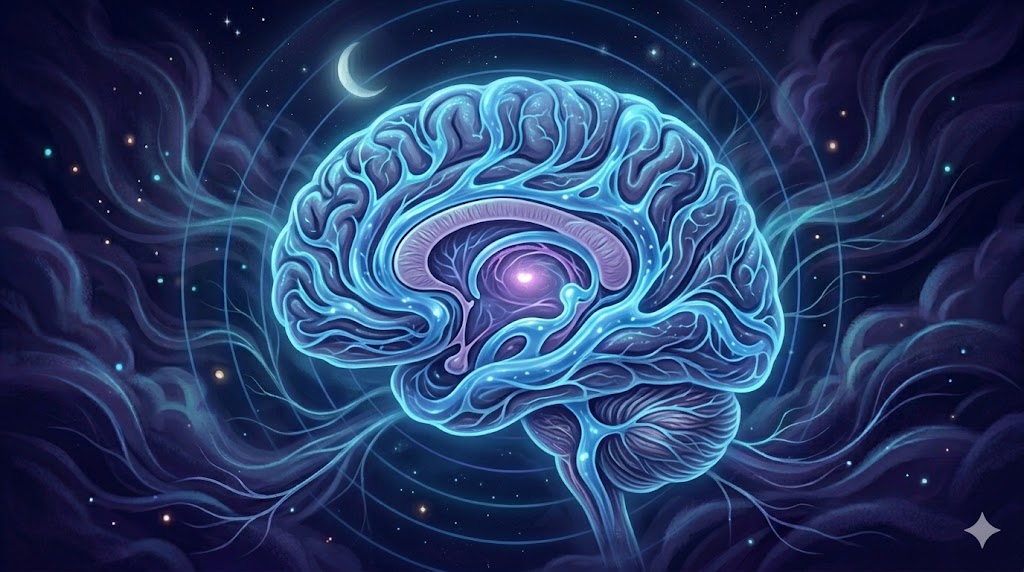
Deep sleep (N3 or slow-wave sleep) is where the most dramatic physical restoration happens. Your brain shifts to slow, synchronized waves. Human growth hormone is released — this is when your body repairs muscle tissue, clears cellular debris, and strengthens your immune system. Your glymphatic system (the brain's waste-clearance network) becomes ten times more active, flushing out metabolic byproducts including the amyloid proteins linked to Alzheimer's disease. Deep sleep is heaviest in the first half of the night, which is one reason cutting sleep short is so costly — you're cutting from the most restorative part.
REM sleep (Rapid Eye Movement) is the stage most associated with vivid dreaming. Your brain is almost as active as when you're awake, but your body is temporarily paralyzed. REM sleep is critical for emotional processing, creativity, and consolidating complex, procedural memories. It also plays a major role in regulating mood — people who are REM-deprived become emotionally reactive much faster. REM sleep is more concentrated in the second half of the night, so cutting those final two hours hits your emotional resilience especially hard.
You cannot simply "catch up" on lost sleep over a weekend. While you can repay some of the acute debt, the cognitive deficits accumulated during a week of short sleep persist well beyond the catch-up period. Chronic sleep restriction reshapes how your brain functions — and recovery takes weeks, not a single long Sunday lie-in.
Sleep Debt: The Hidden Accumulation
Sleeping six hours a night instead of eight for ten days produces cognitive impairment equivalent to going without sleep for 24 hours straight — but here's the alarming part: people don't feel that impaired. Your subjective sense of tiredness adapts and stabilizes, even as your objective performance continues to decline. You feel fine. You're not fine.
Sleep debt compounds. Cutting one hour per night for a week is roughly equivalent to pulling an all-nighter. The effects show up in reaction time, working memory, decision-making, emotional regulation, and immune function. Chronically sleep-deprived people have elevated cortisol levels, disrupted hunger hormones (more ghrelin, less leptin), and higher rates of depression and anxiety.
Screens, Blue Light, and Stolen Melatonin
Your sleep-wake cycle is governed by a hormone called melatonin, produced by your pineal gland in response to darkness. As the sun sets and light fades, melatonin levels rise to signal "time to sleep." Your body temperature drops, alertness fades, and you begin to feel drowsy.
Blue-wavelength light — the kind emitted by phones, tablets, laptops, and LED lighting — is particularly effective at suppressing melatonin. Research from Harvard found that blue light suppresses melatonin for roughly twice as long as green light and shifts your circadian rhythm by up to three hours. Using your phone in bed isn't just distracting. It's actively delaying your body's sleep preparation at the hormonal level.
The content also matters. Consuming stimulating, emotionally charged, or mentally activating content keeps your cortisol and dopamine levels elevated — the opposite of where they need to be to fall asleep.
- Dim everything 60–90 minutes before bed. Switch to warm-toned bulbs or use night mode aggressively. Your eyes are 10,000 times more sensitive to light when your melatonin is rising.
- Keep your sleep and wake times consistent, even on weekends. Irregular sleep schedules disrupt your circadian rhythm — a pattern researchers call "social jet lag." Consistency is the single most impactful sleep habit you can build.
- Cool your room to 16–19°C (60–67°F). Your core body temperature needs to drop about 1–2°C to initiate sleep. A cooler environment accelerates this drop and dramatically improves deep-sleep quality.
Memory, Mood, and the Morning After
Learning something new before a full night of sleep dramatically improves how well you retain it — not because you're still thinking about it while you sleep, but because the memory consolidation happening in N2 and REM sleep literally strengthens the neural connections formed during the day. Medical students, language learners, musicians, and athletes all show measurable performance improvements after sleep compared to an equivalent period of wakefulness.
The emotional impact is equally profound. A classic sleep deprivation study found that participants who missed a night of sleep showed 60% stronger amygdala reactivity — the brain region that governs emotional responses. They were essentially three times more emotionally volatile on the same neutral stimuli. Sleep is not just physical rest. It is how your brain regulates your entire emotional life.
The Bottom Line
The world will not run out of things to do after 10 p.m. But your ability to engage with those things — to think clearly, feel steadily, learn effectively, and stay healthy — depends almost entirely on what happens when you put them down and close your eyes. Seven to eight hours isn't a luxury. It's the foundation everything else is built on.