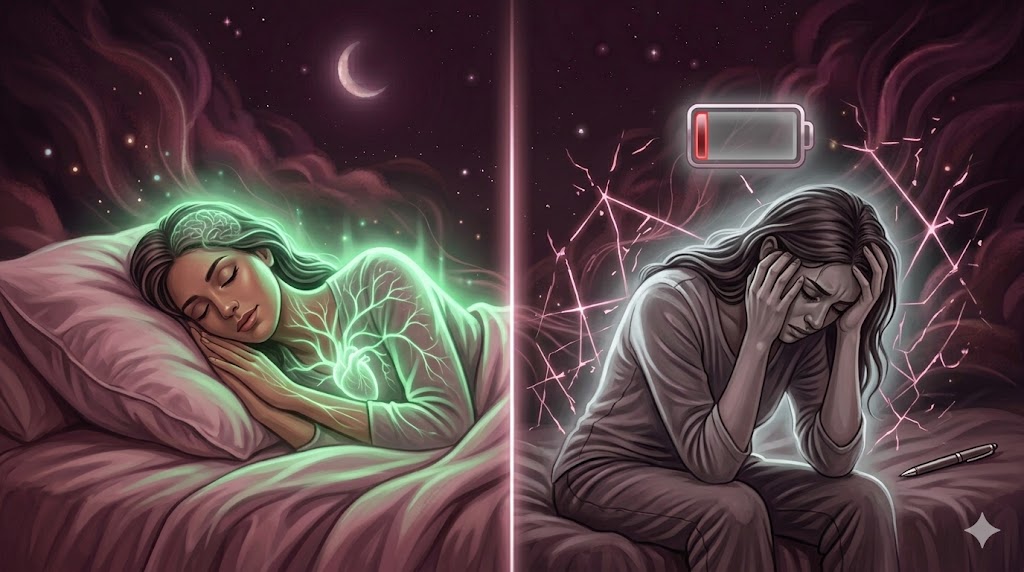
Most of us know what tired feels like. A long week, a stretch of poor sleep, a demanding project that finally wraps — and then the weekend comes, you rest, and Monday morning you feel close to human again. That's tiredness: a normal, recoverable depletion of energy.
Burnout is something entirely different. It doesn't recover over a weekend. Sometimes it doesn't recover over a month. And the most important thing about it is that many people don't recognise they're in it until they're deep inside it — because it creeps in gradually, wearing the disguise of just being "really tired."
What Burnout Actually Is
The World Health Organisation officially recognised burnout in 2019, classifying it in the ICD-11 as an occupational phenomenon — not a medical condition, but a significant syndrome resulting from chronic workplace stress that hasn't been adequately managed. That recognition matters, because it validated something millions of people had been experiencing without a name.
Psychologists Christina Maslach and Michael Leiter, who have studied burnout for decades, define it across three dimensions that together form a recognisable picture:
- Exhaustion: Not just physical tiredness — a profound depletion that touches everything. Emotional resources feel completely drained. You wake up tired. You go through the motions. The tank is empty before the day has started.
- Cynicism (or depersonalisation): A growing emotional detachment from your work, your colleagues, or the people you serve. You find yourself going through the motions, caring less, becoming more irritable or dismissive. Things you used to care about start to feel pointless or hollow.
- Inefficacy: A creeping sense that nothing you do makes a real difference. Confidence erodes. Accomplishments feel meaningless. Even when you do good work, it doesn't register. You feel increasingly incompetent despite objective evidence to the contrary.
All three together — not just exhaustion, but the combination of exhaustion, detachment, and a lost sense of effectiveness — is what makes burnout distinctly different from normal tiredness, or even from depression (though the two frequently co-occur).
The Critical Difference: Rest Doesn't Fix It
This is the clearest diagnostic test. When you're tired, rest is the cure. Sleep more, take a break, do nothing for a few days, and the energy returns. Your enthusiasm comes back. You remember why you care about the things you care about.
When you're burned out, rest gives you temporary relief but doesn't restore you. You come back from a holiday feeling okay for a day, and then the deadness returns almost immediately. This is because burnout is not a resource deficit that sleep can refill — it's a dysregulation of the system that manages stress, meaning, and motivation at a much deeper level. The nervous system is stuck. The story you've been telling yourself about your work — or yourself — has curdled.
You may be experiencing burnout (not just tiredness) if several of these ring true:
- Fatigue that doesn't improve with rest or time off
- Dreading the start of every workday, including after weekends
- Emotional numbness — not sadness exactly, but a flatness or indifference
- Becoming more irritable, cynical, or impatient than is normal for you
- Difficulty concentrating or completing tasks you used to find easy
- Withdrawing from people — colleagues, friends, or family
- Feeling like your efforts don't matter, or like nothing you do is ever enough
- Physical symptoms — headaches, frequent illness, tension, stomach issues — without a clear medical cause
- Loss of satisfaction from work or activities you previously enjoyed
How Burnout Builds
Burnout rarely arrives suddenly. It accumulates across months or years through a combination of sustained high demands, insufficient recovery, limited autonomy, poor recognition, a mismatch between your values and what you're asked to do, and a persistent feeling of unfairness. Any one of these alone might be manageable. Several together, over a long period, without adequate support — that's the formula.
It also frequently affects the people who care most. Burnout is not a sign of weakness or fragility — it's disproportionately common in people who are conscientious, high-performing, and deeply invested in what they do. The same drive that makes someone excellent at their work can make them reluctant to slow down until the system breaks.
Recovery: What Actually Helps
Recovery from burnout is real, but it is slow. Weeks of rest, not days. And it requires more than just time off — it requires structural change.
- Reduce the load first. You cannot think or rest your way out of burnout while still in the conditions that caused it. Some reduction in demands — even temporary — is almost always necessary.
- Protect recovery time fiercely. Sleep, non-digital leisure, physical movement, and time in nature are not optional extras. They are the mechanism of recovery. Treat them as non-negotiable.
- Reconnect with meaning. Burnout corrodes your sense of purpose. Deliberately spending time on things that feel meaningful — inside or outside work — helps rebuild the sense of efficacy that burnout destroys.
- Talk to someone. Therapy (especially ACT or CBT-based approaches) has strong evidence for burnout recovery. A professional can help you identify which conditions need to change and how to rebuild a sustainable relationship with your work.
- Address the conditions, not just the symptoms. If the environment that caused burnout doesn't change, recovery is fragile. Where possible, negotiate workload, set clearer boundaries, and address the systemic factors that made burnout possible in the first place.
If you're reading this and recognising yourself in it — that recognition itself is valuable. Burnout is not a character flaw. It's what happens when human beings are asked to give more than they can sustainably give, for longer than any system can sustain. The first step is simply seeing it clearly.